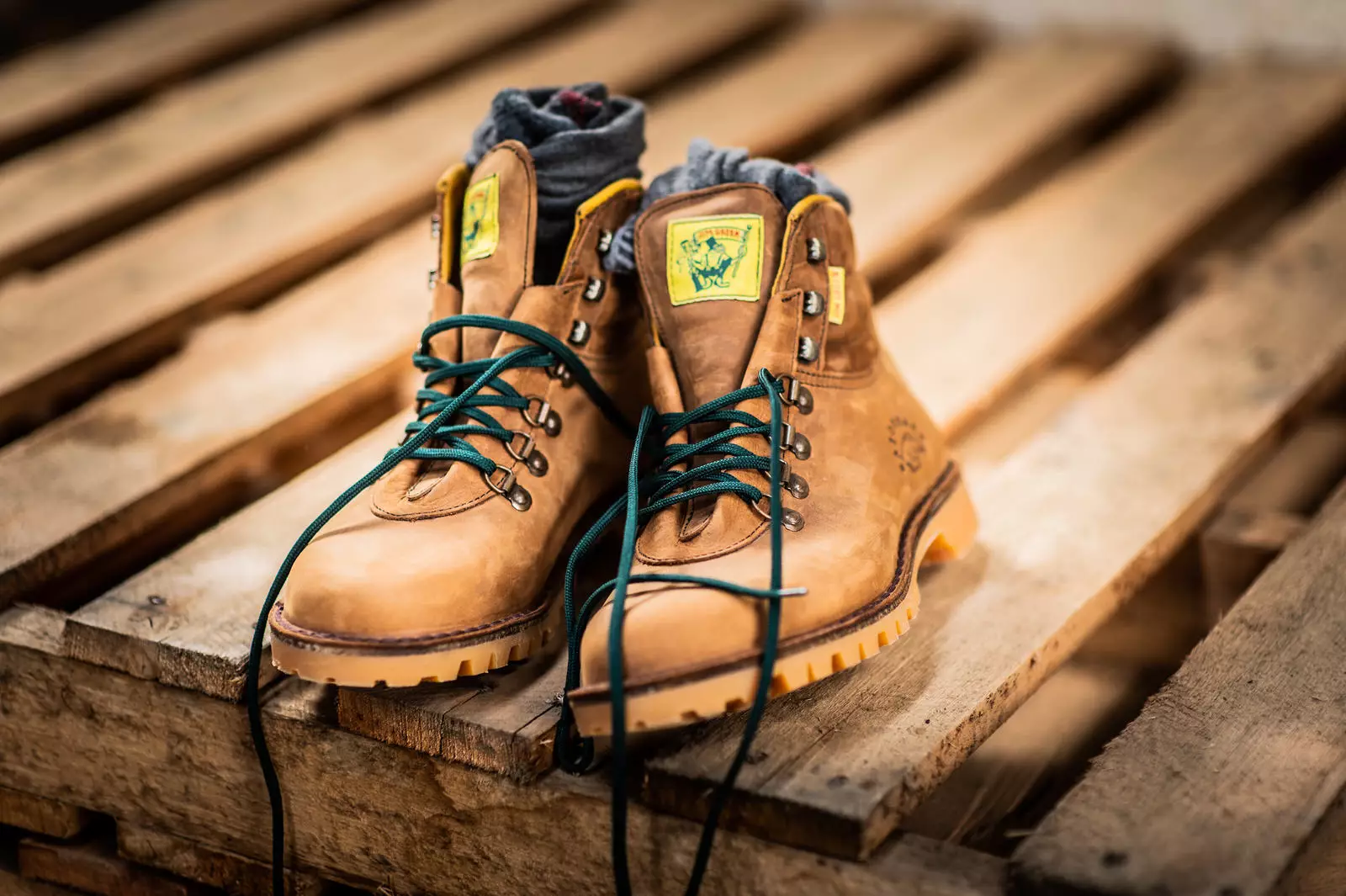
Grant Stone Boots Review
Goodyear-welted boots at prices the heritage American names abandoned years ago. Resoleable, built from proper leathers, and the closest thing to a bargain that exists in serious footwear.

- Construction
- Goodyear welted
- Repairability
- Resoleable by any competent cobbler
- Materials
- Full-grain and shell leathers
Reasons to buy
- Goodyear welted — resoleable indefinitely by any cobbler
- Leather quality matches boots costing considerably more
- Lasts are comfortable out of the box relative to the category
- Direct pricing undercuts the heritage names substantially
Reasons to avoid
- Break-in period is real — weeks, not days
- Heavy compared with modern casual footwear
- Sizing runs distinctively; read the guidance carefully
Price per year, not price per pair, is the arithmetic that makes sense of serious footwear. A glued sneaker is finished the day its sole wears through — there's nothing to repair, because there's no construction to repair into. A Goodyear-welted boot goes back to a cobbler instead: the worn sole comes off, a fresh one is stitched on, and the same broken-in upper carries on as if nothing happened. Run that cycle a few times and the expensive boot quietly becomes the cheap one, while the cheap shoes reveal themselves as a subscription with a landfill clause.
Grant Stone's whole position is that this construction shouldn't cost what the heritage American names now charge for it. The boots are welted, built on genuinely comfortable lasts from full-grain and shell leathers, and sold through a direct model that strips out the layers of markup between factory and foot. Handled side by side with boots at considerably higher prices, the difference tends to live in the label rather than in the make — which is either an indictment of the category or a compliment to this brand, depending on where you're standing.
Ownership begins with a negotiation. Leather this substantial has to mould to the specific shape of your foot, and until it does the boots will remind you they exist — snug spots, stiff flex points, a heel that hasn't softened. Modern footwear has trained people to expect day-one comfort, so it bears saying plainly: the early discomfort is a phase, not a defect, and short wears building gradually get you through it with the least drama. They're also heavy by any modern standard, and stay that way; that's the mass of the construction you're buying.
Sizing deserves the same patience as break-in. These lasts have their own proportions, and ordering by your sneaker size is the classic first-order mistake in welted footwear. Measure both feet, read the guidance for the specific last, and expect the correct fit to feel different from a sneaker's — held at the heel and instep, roomier at the toes. That's the boot fitting properly, not a size too far.
Care is where the value compounds. Wipe them down, condition the leather occasionally, rest them between wears where you can, and keep them dry. None of it is ritual; all of it extends the leather's working life. And when the sole finally wears through, that's not the end of the boot — it's the service interval. A cobbler renews the sole and the upper, by then perfectly moulded to you, simply continues.
The right buyer is anyone tired of replacing footwear on a schedule, anyone in boots often enough for cost per wear to matter, and anyone drawn to objects that improve with age rather than degrade. The wrong buyer wants lightness and instant comfort, and will be happier elsewhere — no argument. For everyone in the first camp, this is about the closest thing to a bargain that serious footwear currently offers, and the reason this site rates it as highly as anything in the category.
How we tested
The Grant Stone Boots was scored against the same written rubric we apply to every Boots & Footwear product — real-world performance, build quality, ease of use, upkeep and value. Full protocol on our How We Test page.